


Offshore Sailing
Offshore sailing begins where coastal sailing ends.
It’s the point where distance matters, land drops away, and decisions carry weight over hours and days, not minutes. There are no quick resets, no easy exits, and no shortcuts back to the dock. Everything unfolds underway.
Sail Libra’s offshore sailing passages are designed to give sailors real experience beyond the shoreline. This is not a classroom, and it’s not theory. It’s time spent sailing a capable boat offshore, standing watches, managing systems, navigating weather, and learning how a vessel and crew function when help is far away and self-reliance matters.
Offshore sailing is less about excitement and more about judgment. It’s about pace, preparation, communication, and consistency. You learn how fatigue affects decisions, how weather evolves over time, and how small choices compound over long distances.
For sailors considering ownership, chartering, or longer-range cruising, offshore experience changes everything. It sharpens awareness, builds confidence, and replaces uncertainty with familiarity. Things that once felt abstract become routine.
This page explains what offshore sailing aboard Libra is actually like, what you’ll learn underway, and who these passages are designed for.


What Offshore Sailing Is Like
Once the dock lines are cast off and the shoreline fades, offshore sailing settles into a very different rhythm. Life aboard becomes structured, deliberate, and continuous. There is no start-and-stop to the day. The boat is always moving, and the crew operates within that flow.
Watches are the foundation. Offshore, we sail on a structured rotation that balances rest, responsibility, and awareness. Time is divided into predictable blocks, allowing everyone to contribute while still getting meaningful rest. You’re never operating alone. Watches are stood in pairs, with clear expectations, steady oversight, and an experienced hand nearby to guide decisions and answer questions as they arise.
Days and nights blend together. Meals happen underway. Sail changes, course adjustments, and system checks are done as conditions evolve. You learn how to manage energy, attention, and decision-making over time rather than reacting moment by moment.
Pace matters offshore, but rushing doesn’t. We sail with intention, adjusting plans as weather, sea state, and the boat dictate. Sometimes that means sailing. Sometimes it means motoring. The goal is not constant motion, but steady, well-judged progress that respects both the crew and the boat.
Fatigue is real offshore, and learning to manage it is part of the experience. You begin to recognize how rest, nutrition, and communication affect performance. Decisions are made calmly, discussed openly, and revisited as conditions change.
Offshore sailing strips things down to what matters. Good habits repeat. Systems are checked routinely. Communication becomes clear and direct. Over time, the unfamiliar becomes normal, and confidence grows not from adrenaline, but from competence built hour by hour.
This is the environment where offshore sailors are made. Not through intensity or pressure, but through consistency, structure, and time underway.

Mate Brooke Carleton
On Libra passages, we sail with a dedicated mate responsible for day to day deck operations and onboard systems, keeping both the boat and crew operating smoothly while underway. Brooke manages deck ops, maintenance, provisioning, and onboard logistics, ensuring the vessel is organized, efficient, and ready for whatever the passage brings. She is also a top tier problem solver with a strong mechanical and practical skill set.
Her role supports safe watch standing, effective sail handling, and a steady onboard rhythm, allowing the crew to focus on learning, sailing, and seamanship without distraction. Brooke’s presence is a key part of how Libra runs professionally offshore and a major reason the boat functions as a cohesive, well run team at sea.
What You Learn Offshore
Offshore sailing teaches lessons that don’t come from short trips or controlled environments. The learning happens gradually, through repetition, observation, and decision-making over time. Nothing is rushed, and nothing is theoretical.
One of the most important skills developed offshore is judgment. You learn how to assess weather trends rather than individual forecasts, how to balance speed with comfort, and how to make conservative decisions that hold up over long periods. Offshore sailing rewards consistency more than intensity.
Watchstanding becomes second nature. You learn how to manage the helm, maintain situational awareness, monitor traffic, and recognize changes in conditions before they become problems. Over time, confidence comes not from reacting quickly, but from seeing patterns early and responding deliberately.
You also gain a deeper understanding of how systems behave when they’re in continuous use. Electrical loads, steering systems, rigging, sails, and deck gear are not theoretical concepts offshore. You see how they perform over days, how small issues emerge, and how routine checks prevent larger problems later.
Navigation offshore is about planning and follow-through. Routes are discussed in advance, then adjusted as conditions evolve. You learn how weather, sea state, boat speed, and crew condition interact, and how to make changes that improve outcomes hours or days ahead.
Perhaps most importantly, offshore sailing builds confidence that carries forward. The uncertainty that surrounds long passages fades once you’ve lived the routine. What once felt intimidating becomes familiar. You begin to trust your ability to think clearly, manage fatigue, and contribute meaningfully as part of a capable crew.
These are not skills learned in isolation. They develop together, underway, through real experience. When the passage ends, what you take with you is not just time at sea, but a clearer understanding of how offshore sailing actually works.
.jpg)

Why Offshore Miles Matter
Offshore miles change how sailors think, plan, and operate. Time spent offshore isn’t just distance logged, it’s experience accumulated under conditions that can’t be simulated close to shore.
Sailing offshore forces continuity. Decisions made in the morning still matter at night. Weather systems evolve rather than reset. Fatigue, comfort, and boat performance all interact over time. Learning to manage that continuity is what separates offshore experience from shorter coastal sailing.
For sailors planning to charter elsewhere, offshore miles matter because they demonstrate readiness. They show that you’ve stood watches, managed a boat through changing conditions, and operated as part of a crew over multiple days. That experience carries real weight when stepping onto unfamiliar boats or planning longer routes.
For future boat owners, offshore miles provide clarity. They reveal how systems behave when used continuously, how the crew dynamic evolves over time, and how decision-making changes when there’s no easy exit. Many sailors discover offshore whether ownership fits their expectations before committing to a boat of their own.
Offshore experience also builds confidence that translates directly to safer sailing. After living the offshore routine, weather windows feel clearer, night sailing feels manageable, and long legs feel planned rather than intimidating. The unknown becomes familiar.
Miles sailed offshore are not about proving toughness. They’re about building judgment, comfort, and competence that hold up when conditions are less forgiving and decisions matter more.
This is experience that carries forward, whether your next step is chartering, ownership, or simply sailing farther with confidence.

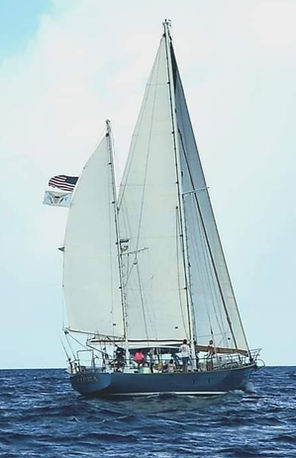
Who Offshore Sailing Is For
Offshore sailing isn’t for everyone, and it isn’t meant to be. These passages are designed for sailors who want to understand what happens when sailing becomes continuous, decisions carry forward, and conditions evolve over days rather than hours.
Offshore sailing aboard Libra is a good fit for sailors who are preparing for larger goals. That includes people considering chartering farther afield, future boat owners who want real experience before committing to ownership, and sailors planning longer passages who want to build confidence in a structured, supportive environment.
It’s also well suited for sailors who have spent years day sailing or cruising coastally and want to step beyond the shoreline. Many sailors reach a point where they’ve done plenty of short trips and lots of in and out of the same old slip, but still haven’t experienced the offshore routine. These passages are designed to bridge that gap.
You don’t need prior offshore experience to join or any sailing experience at all. What matters most is a positive, team-oriented mindset and a willingness to participate. Everyone aboard is part of the crew. Watches are shared, responsibilities are clear, and learning happens through involvement rather than instruction alone, there are no books and no tests and 0 powerpoint presentations.
These passages are not designed for people looking to be passengers, or for those expecting a resort-style experience. Offshore sailing requires engagement, patience, and respect for the boat and the process. Comfort comes from routine and preparation, not from luxury or entertainment.
If you’re curious about offshore sailing, interested in building real experience, and want to learn what extended time at sea is actually like, you’ll likely feel very at home aboard Libra.


How Sail Libra Runs Offshore
Sail Libra operates as a small, owner-run program with a clear structure and conservative approach offshore. Passages are led by the owner and captain, not handed off to rotating skippers or outside crews. The same standards, routines, and expectations apply on every offshore passage.
Libra is a U.S.-flagged vessel operated in accordance with U.S. Coast Guard regulations. Safety systems, operating procedures, and crew management are treated as core responsibilities, not checkboxes. Offshore decisions are made deliberately, with an emphasis on preparation, margin, and sound judgment rather than speed or spectacle.
Crew size is intentionally limited. Libra sails with a small group so communication stays clear, participation stays meaningful, and watch rotations remain effective without unnecessary fatigue. While some offshore operators (mostly those sailing under flags of convenience like many larger commercial or charter operations) carry much larger crews, Libra limits passages to six people aboard + Captain and First Mate. That decision keeps responsibilities real, learning consistent, and life offshore manageable over multiple days underway. Everyone has a role, everyone has a bunk, expectations are set early, and the boat operates smoothly as a result.
Learn more about flags of convenience
Offshore passages are planned with flexibility. Routes, departure timing, and daily goals are adjusted as conditions evolve. Sometimes that means changing plans to maintain comfort and safety. Sometimes it means waiting. Every trip includes built-in weather days, allowing the schedule to remain flexible. The priority is always to sail well, not to force outcomes.
Training offshore aboard Libra is integrated into daily operations. Questions are encouraged, decisions are discussed, and explanations happen in real time as situations develop. The goal is not to overwhelm, but to build understanding steadily as experience accumulates.
This approach creates a calm, capable offshore environment. The boat runs predictably. The crew understands what’s happening and why. Confidence grows from structure, repetition, and time underway, not from pressure or performance.


Night Sailing and Watches
Night sailing is a central part of offshore experience, and it’s treated as such aboard Libra. It isn’t avoided, rushed through, or treated casually. It’s approached deliberately, with structure, preparation, and clear training objectives.
Watches continue on the same rotation day and night. They are stood in pairs, with defined responsibilities and an experienced hand nearby to guide decisions. Lighting is managed carefully, routines remain consistent, and the emphasis is on maintaining situational awareness rather than reacting to every change.
Night sailing is where modern navigation tools become critical. Radar is actively used and tuned, not just monitored. You learn how to adjust gain and sea clutter, interpret targets, and correlate radar returns with visual references and chart data. AIS targets are tracked intentionally, with attention paid to CPA and TCPA, relative motion, and vessel behavior over time. Proximity to commercial traffic is discussed and managed conservatively.
Squalls, wind shifts, and sail handling after dark are treated as normal offshore operations. Reefing systems are used deliberately, with clear communication and defined roles. Sail changes and reductions are planned ahead of time, not improvised under pressure. You learn how to keep the boat balanced and controlled without rushing, even when conditions change quickly.
Night sailing also sharpens judgment. With fewer visual cues, decisions rely more on instruments, sound, feel, and pattern recognition. You learn how to slow things down, verify assumptions, and communicate clearly. Fatigue management becomes practical rather than theoretical.
For many sailors, night sailing is the point where offshore confidence truly settles in. Once you’ve stood watches through the night, managed traffic, adjusted sail plans, and handed off a clean watch at dawn, the uncertainty around offshore sailing fades.
It becomes familiar. And that familiarity is what makes extended offshore passages manageable, predictable, and safe.


The Next Step
If this kind of sailing makes sense to you, the next step is simple. Choose the passage that fits your schedule and goals, review the details, and reach out if you have questions.
Sail Libra is a small, family-owned operation, run directly by Ryan Rayfield, the owner and captain of s/v Libra. Ryan is aboard for every passage. There’s no sales team, no handoff, and no guesswork about who you’re sailing with. What you see here is exactly how the program operates.
Libra is a U.S.-flagged vessel operated under strict U.S. Coast Guard regulations, with professional standards for safety, training, and crew management. This is a working offshore boat, run deliberately and conservatively, with a focus on real seamanship and real experience.
Each passage page includes dates, route information, logistics, and availability. If you’re unsure which trip is the best fit, a short conversation is often enough to point you in the right direction. You’re welcome to reach out directly. Quick questions are best handled by text, and Ryan is happy to respond anytime.
Sail Libra passages are designed for people who want real experience, clear structure, and time underway that actually counts. If that’s what you’re looking for, you’ll likely find your bunk waiting aboard.
→ Learn More About Ryan Rayfield
→ Text Ryan for a Quick Question at +1-251-923-8825
